


Written by Skulblaka_Shur'tugal :
Today, around the world, Pixar's 11th full-length motion picture, Toy Story 3, was released. I'm sure a lot of you have been waiting a long tome to see it; for people who first saw Toy Story 2 in theaters, they've been waiting the better part of eleven years--including myself. In celebration of this movie, I want to take a moment to remember Pixar Animation's films.
First of all, I would like to bring to your attention that, before 1995, animated movies only existed in two genres: those made by Disney, and those not made by Disney. Of these two catagories, the Disney films are by far the most well-known, and most-loved, though some exceptions (The Secret of NIMH, All Dogs Go to Heaven, etc.) do exist. That all changed in 1995, when Pixar, teamed up with Disney, released their very first animated film: Toy Story. This changed animation forever: it threw away the need for hand drawings, and replaced them with a computer.
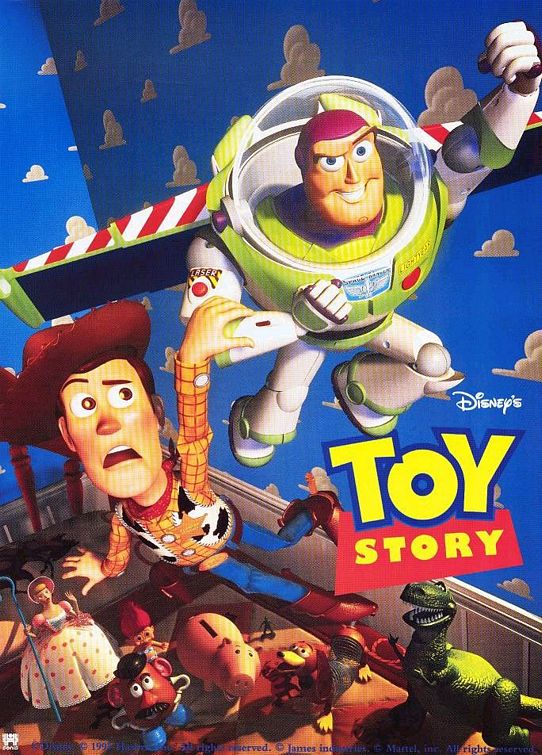
The idea behind a fully computer-animated film first came up as early as 1986, when John Lasseter founded Pixar Animation Studios. At first, they focused mainly on short films, though they won two Academy Awards before releasing Toy Story. Even though Pixar was well-known by the early 1990's, Toy Story was a gamble, one of the most expensive films made at the time. To Pixar's excitement, the film became the second highest-grossing film of 1995, just five million dollars short of Die Hard with a Vengeance, and narrowly beating the Best Picture Oscar nominee Apollo 13.
Pixar instantly knew that they could start making computer-animated films, not for the profit, but for the entertainment of the public--which was a philosophy that Walt Disney followed. They instantly started working on new films, and in 1998, they released A Bug's Life. Even though it was overshadowed by DreamWorks' Ants, it was still loved by the people, and Pixar kept making films.
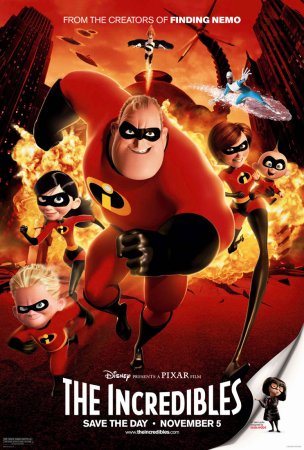
In 1999, they released Toy Story 2, which was meant to be a direct-to-video sequel, but ended up going to the big screen after the cast from the first movie returned, and a wonderful story was developed. Toy Story 2 went on to win the Golden Globe Award for Best Picture--second only to the Academy Award, and only the third animated film to score such a feat. Pixar started releasing films more often after that. Monsters, INC. was released in 2001, and was one of the highest-grossing films released that year. Finding Nemo, in 2003, became the highest-grossing film of all time, only surpassed by Shrek 2 the next year. The Incredibles, in 2004, was the first Pixar film to receive two Academy Awards, and was considered by many fans and critics alike to be one of Pixar's best films ever.
Change in management within Pixar caused for its next film, Cars, to have many last-minute changes in its script, story, and animation before its release in 2006. This caused it to, while being a good movie, have some of its aspects rugged and, as many critis noted, not quite up to Pixar's standards. Many considered this film to be the beginning of Pixar's downfall, but Pixar's next film, Ratatouille, proved them wrong, when it became not only the best-rated movie of the year, according to RottenTomatoes.com, but also the best animated film of the year. 2008 brought WALL-E, which many considered a forrunner at the Academy Awards. It ended up receiving six nominations--tied with Beauty and the Beast as the most for an animated film. 2009's Up became Pixar's second highest-grossing film ever, the second best-reviewed flim of the year (after The Hurt Locker), and only the second animated film to be nominated the Academy Award for Best Picture.
Pixar certainly has come a long way, and now, with Toy Story 3 in theaters around the world, I say we take a moment to celebrate its triumphs. Well done, Pixar!


 462 visits
To be able to send messages, you must be connected.
Create an account, it's free!
Or connect directly with





 Keyframe, the most popular review site for animated films and series

Comments
lf
ingLover
silver
hedgehog
Zero
1925