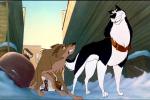


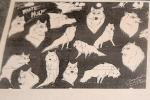
And why the White Wolf is exactly and only the symbol. Neither real nor spirit
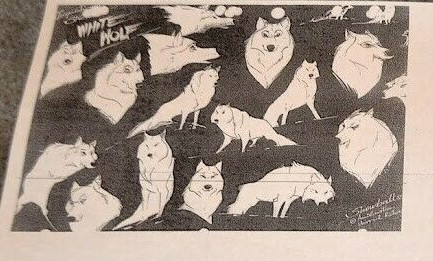
The original "Balto" was almost a masterpiece. If the crew had more budget (hence longer length) and had a chance to release laserdisc with all deleted content and production materials like TLK did, "Balto" would become full masterpiece. Now the film, created as the one concluded story by Amblimation, has some elements, which were either never developed or deliberately stated in mystery and unanswered from film's perspective.
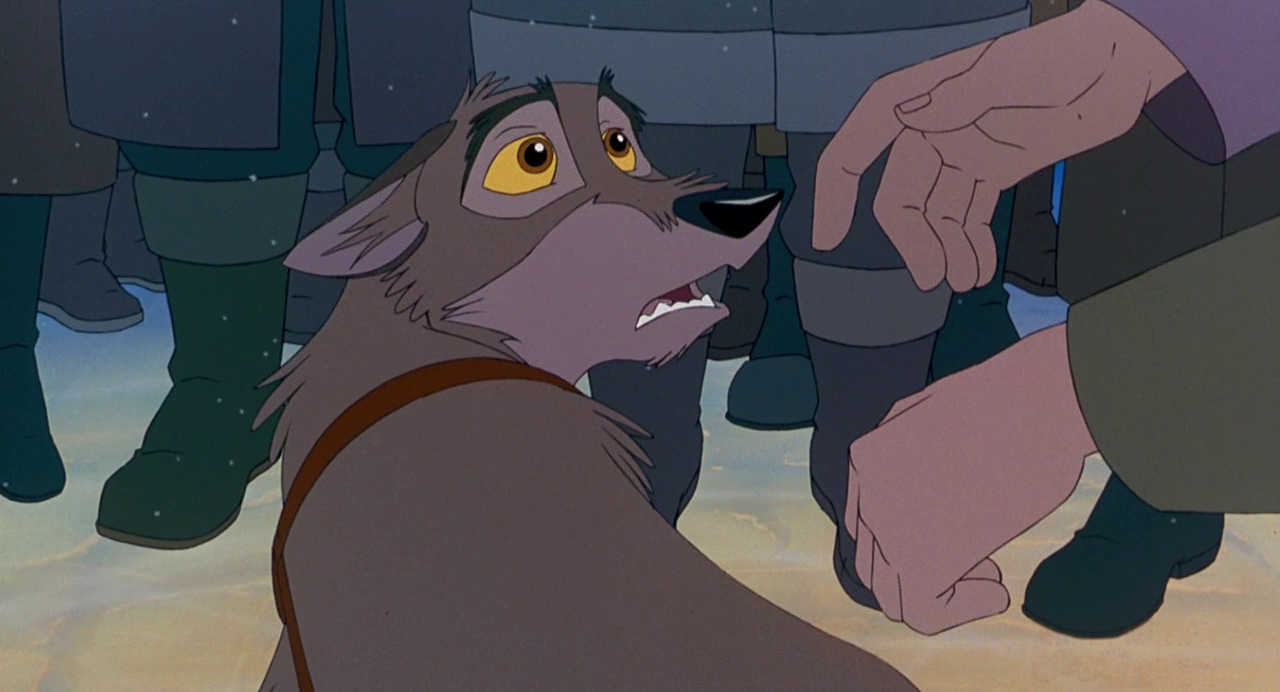
One of them is Balto's parents, another one is the White Wolf. The film introduces Balto as a stray wolfdog, who lives in Nome among humans and dogs, who know about his mixed heritage, he wants to be a dog, avoids wolves (who accepted him) and is ashamed of his wolf heritage until this awesome scene with the symbolical white wolf. There's no hints that Balto came from the wild or whatever. Due to these facts, it's pretty safe to say that in the original film either Balto's wolf parent was father (while mother is a dog parent) or Balto's backstory was never developed, and the wolf parent was never stated at all. Simon Wells in interview confirmed that he always considered Balto's mother as a husky and Balto's father as a wolf, while Boris found and adopted Balto in Nome, i.e. Balto probably was born in Nome. Another hint to the fact that Balto's wolf parent is either father or was never stated, is that Balto says to Jenna "Big paws kinda run in my family. At least, one side of my family" — although it can perfectly work as "I deny my wild father and his heritage, so I don't want to mention him", the most plausible version is that the wolf parent was never stated from film's perspective (again, one concluded story from Amblimation). Only watching and studying the workprint of the film with all alternative/extended/deleted scenes can help to find the truth.
But what's about the magnificent White Wolf? Another element, which deliberately was left in mystery. Wells said:
"Whether the White Wolf is Balto's father or some kind of ephemeral Spirit of the Wolf is deliberately unstated. <...> Perhaps the Wolf is a manifestation of Balto's inner voice, telling him to take ownership and use that part of him that he has always been ashamed of – certainly that is the message Balto takes from the encounter, real or not.
(And by the way, if it was really his dad why didn't the old man help him drag the antitoxin up the cliff?)"
So, the answer is clear — the White Wolf was just a metaphor of Balto's wolf side and self-acceptance. This character is neither spirit nor real. Plus, the White Wolf is a male.
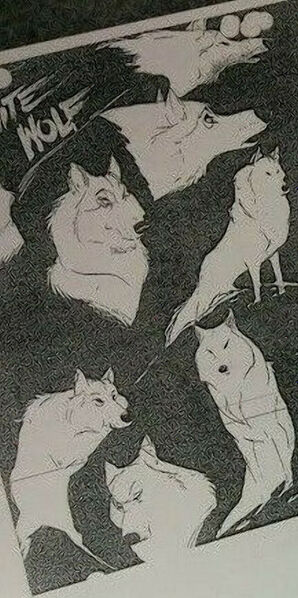
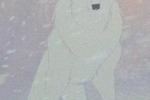
Not only Wells describes the White Wolf as a male. The production materials (storyboards, sketches and concept arts) also depict this character as a male:
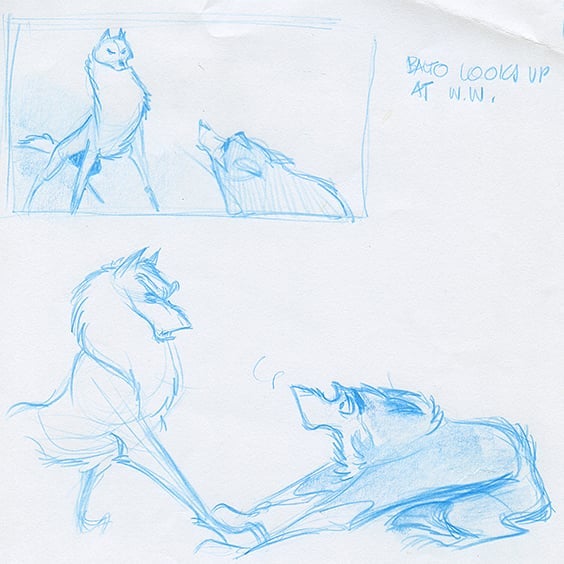
In one of Harald Siepermann's sketches the White Wolf looks like old and severe male:
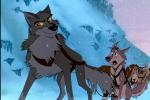
The film and its production materials also have some visual hints that the White Wolf is exactly a symbol.
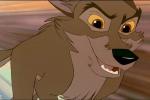
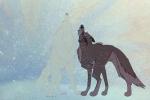
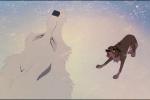
First of all, the paw prints of the White Wolf appear only when Balto decides to find out who he truly is and embraces his wolf heritage. During the sequence the White Wolf disappears and again appears as ephemeral illusion among blizzard. Second, when the White Wolf howls, when Balto howls and when they howl together, the sled team hears absolutely nothing. Only after this scene they hear only one howl and get frightened — they heard Balto's howl. More hints of the symbolical nature of the White Wolf is in Harald Siepermann's storyboard version of this scene. This early version has an extended ending — Balto and the White Wolf howl together, the White Wolf as an mirage disappears in the winds of snow storm, Balto gets confused and tries to find him, but then he happily continues to howl — and only after this we come to the sled team. Moreover, some details in this version also hint that the White Wolf is not only manifestation of Balto's wolf side and self-acceptance, but also the symbol of Balto's true self and realizing own noble and pure soul/heart (i.e. the White Wolf is literally Balto himself) — in the beginning of the scene Balto in despair and sorrow mourns about Rosie, but for a second he sees the mirage of the howling White Wolf far away among strong blizzard and rare rays of either the sun or lantern, while in the ending of the sequence Balto accepted his wolf nature and howled under the full sun and among calmled snowstorm in the same pose the White Wolf howled in the beginning in the blizzard. In this early storyboard version the White Wolf also looks like a male (and I like, how he tenderly comforts Balto).
Also let's look at the official novelization of the original movie. Again, the White Wolf is described as a male. Plus, the novel also shows the symbolic nature of the White Wolf. In this version Balto prepares to climb the mountain with the medicine box, after noticing that his paw perfectly fits in paw prints of the White Wolf, the White Wolf appears again, but at this time on the top of this mountain (where the sled team is), and encouragely howls to Balto. Balto howls to him, and after this dogs hear the howling and start to afraid. So both the director, the novel, the film and its production materials confirm that the White Wolf is a male and is a symbol of Balto's true self, wolf side and self-acceptance.
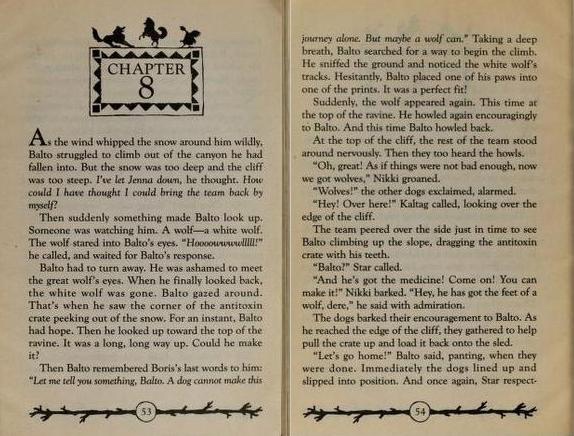
So, how happened that in the sequel the White Wolf became the female totem deity of the wolves and Balto's mother? Many people refused to believe that the sequel crew just liked this character and decided to change the canon. Many used Steele's joke as a smoking gun, but I never understood why. Steele knew nothing about Balto, he only knew that Balto is a stray half-breed, untrusted by townfolks. His joke absolutely doesn't imply "wolf mom" thing at all. His insulting either means "Your mommy's tastes run more toward wolf. She loves wild animals" (and it explains, why Balto became so pissed off) or is just a joke about "You're half-wolf, you have to know the wolf language. Translate for us some messages! Arhoo!" (it's more plausible, 'cause Steele and his gang mocked only on Balto and wolf howling language, not his mother, if you watch the full scene). Plus, Simon Wells, the director of the original film, described Balto's father as a wolf parent and Balto's mother as a dog. And, finally, the scriptwriter of the sequel has confirmed that nobody gave any information about the White Wolf from Balto-1, so she liked this character and decided to turn it into Balto's mother and the revered deity of wolves. So, Steele's joke is not the case. The idea of Balto's mother being his wolf side and of the White Wolf being his mother comes from Balto-2, not from the original film.




 1208 visits
 Report this article