THE SERUM RUN
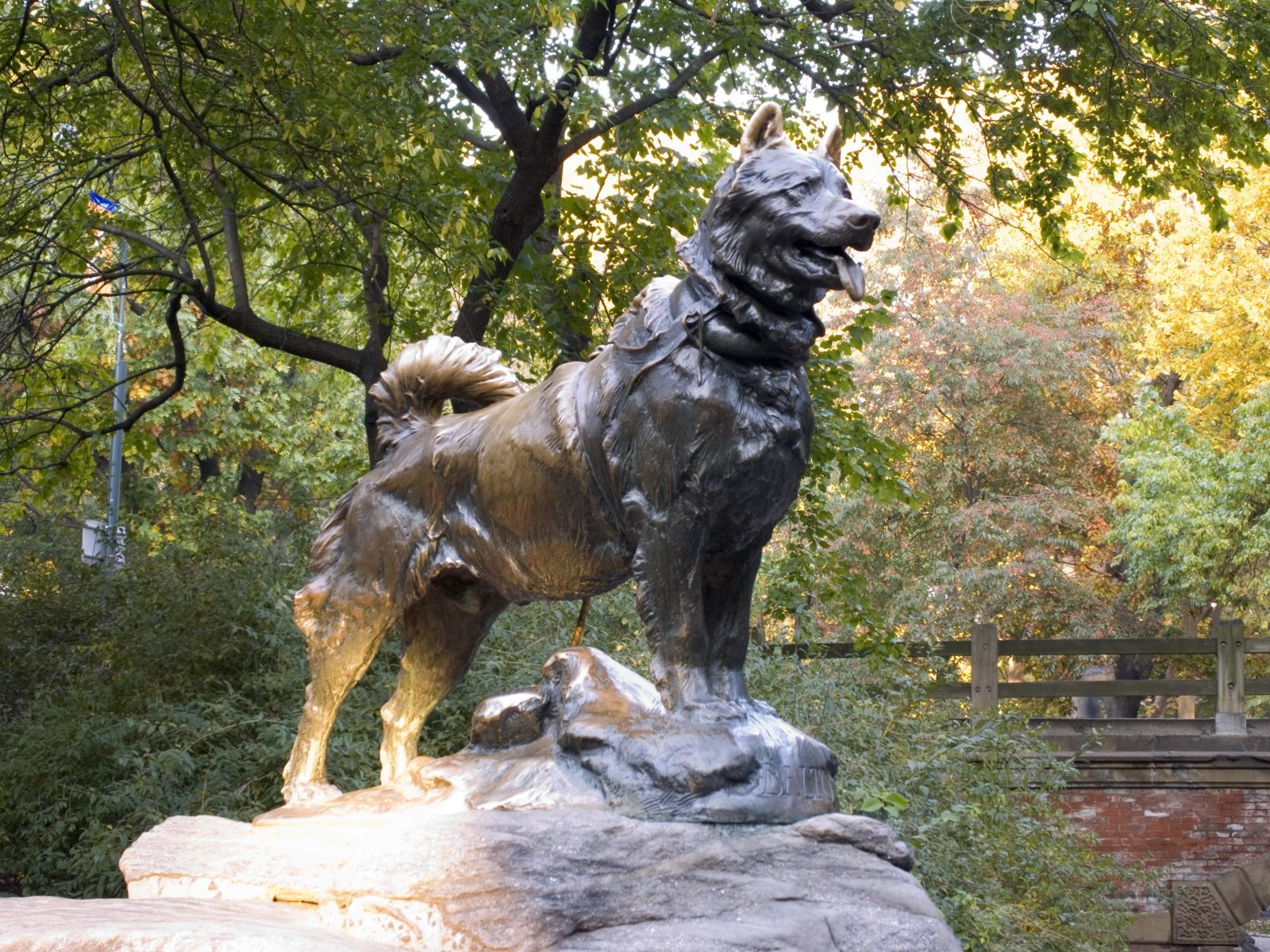
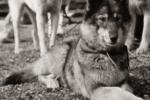
For several decades, visitors of Central Park, one of the largest parks in New York, have admired a bronze statue of a Siberian Husky named Balto. It represents he, the other dogs and men who faced the Alaskan wilderness to relay 300,000 units of antitoxin from Nenana to Nome.
Not long after the Alameda's departure from Nome in late December of 1924, numerous cases of tonsillitis have spread throughout the small frontier town. Or so Dr. Welch thought. By January 1925, two more Eskimo children out on the Sandpit had died, which made Welch suspect the worst. Nome wasn't dealing with tonsillitis, but a deadly disease called Diphtheria. Welch confirmed his suspicion on Tuesday, January 20th when he checked in on three-year-old Billy Barnet at the Maynard Columbus hospital. Welch tried to save Billy by using old remedies, but Billy's condition continued to decline and passed away shortly after.
At this point, after Dr. Welch held a meeting with the mayor and city council, Nome was put under strict quarantine in an attempt to keep the disease from spreading. Welch then asked the U.S. Signal Corps to send out two urgent news bulletins for fresh serum, as Welch only had a small supply that was six years-old. The first notice was sent out to every major town in Alaska, the other to Washington D.C. The closest supply was located in Anchorage, 1,500 miles away from Nome. Planes couldn't take off due to a snow storm, and the sea was frozen, so all they could do was to ship the cargo to Nenana by train, 674 miles away from Nome.
Having weighed the pros and cons of possibly flying the serum in from Nenana, which would have taken about four hours, Governor Bone decided that the safest way to ship the serum was by dogsled. However, instead of sticking with Mark Summer's original plan of having a musher from Nenana meet Leonhard Seppala midway in Nulato, Bone decided that a relay using the fastest teams was a better idea.
Originally, Gunnar Kaasen and Balto were never apart of the serum run. It wasn't until Governor Bone wanted more drivers to cover last leg of the relay between Nulato and Nome that he became apart of run. With the help of Mark Summers, it was decided that Leonhard Seppala's leg of the relay, which was a 630 mile round trip, was to be shortened. Instead of Seppala driving all the way from Nulato to Shaktoolik, he would wait for the serum in Shaktoolik. For the final leg of the journey, Summers requested that Gunnar Kaasen, a friend of Seppala who worked for him at the Hammon gold mining company, he get a team ready and drive out to Bluff. Before Seppala's departure, he mentioned that if a team was needed for company business, to put Fox in the lead. Despite this request, Kaasen choose Balto instead.
SERUM RUN PARTICIPANTS
Jan 27-28 | Bill Shannon | Nenana to Tolovana | 52 miles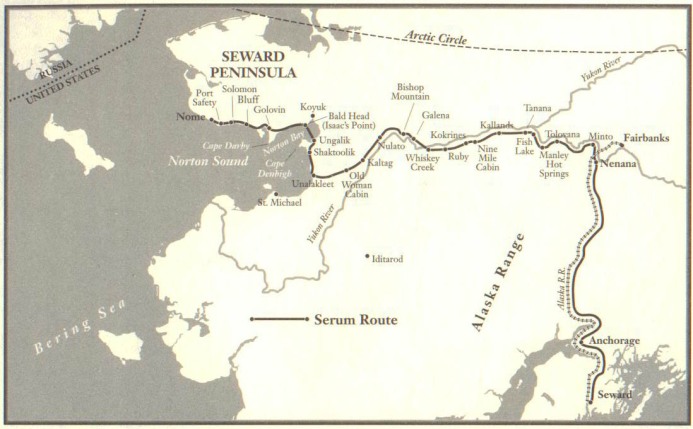
Jan 28 | Edgar Kallands | Tolovana to Manley Hot Springs | 31 miles
Jan 28 | Dan Green | Manley Hot Springs to Fish Lake | 28 miles
Jan 28 | Johnny Folger | Fish Lake to Tanana | 26 miles
Jan 29 | Sam Joseph | Tanana Kallands | 34 miles
Jan 29 | Titus Nikolai| Kallands to Nine Mile Cabin | 24 miles
Jan 29 | Dave Corning | Nine Mile Cabin to Kokrines | 30 miles
Jan 29 | Harry Pitka | Korkrines to Ruby | 30 miles
Jan 29 | Bill McCarty | Ruby to Whiskey | Creek | 28 miles
Jan 29 | Edgar Nollner | Whisky Creek to Galena | 24 miles
Jan 30 | George Nollner | Galena to Bishop Mountain | 18 miles
Jan 30 | Charlie Evans | Bishop Mountain to Nulato | 30 miles
Jan 30 | Tommy Patsy | Nulato to Kaltag | 36 miles
Jan 30 | Jackscrew | Kaltag to Old Woman Shelter | 40 miles
Jan 30-31 | Victor Anagick | Old Woman Shelter to Unalakleet | 34 miles
Jan 31 | Myles Gonangnan | Unalakleet to Shaktoolik | 40 miles
Jan 31 | Henry Ivanoff | Shaktoolik to Seppala handoff
Leonhard Seppala | Shaktoolik to Golovin | 91 miles
Feb 1 | Charlie Olson | Golovin to Bluff | 25 miles
Feb 1 | Gunnar Kaasen | Bluff to Nome | 53 miles
The last musher of the relay was suppose to be Ed Rohn, but due to a blizzard, Welch decided that it would be safer for the relay to be stopped until the storm passed. However, the message didn't reach Kaasen. When Olson finally reached Bluff, he warned Kaasen that it would be wise to wait for the weather conditions to improve. Two hours later, after 10PM, the storm hadn't died down. In fact, the storm had only gotten worse. Concerned about the trails becoming impassible, Kaasen decided to brave the thirty-four miles to Solomon. After contending with the elements, Kaasen could see a depression off in the distance. It was Bonanza Slough. Solomon was two miles behind him, so Kaasen decided to continue onward to Port Safety, which was ten miles away. By the time Kaasen reached Port Safely, the roadhouse where Ed Rohn was to take the serum to Nome, was dark. Ed assumed that Kaasen had got the message and was waiting back in Solomon. Not wanting to wake Ed and wait for him to harness up his steam, Kaasen, again, decided to press on.
Around 5:30AM on February the 2nd, Kaasen pulled up to Nome's Front Street. Within minutes of Kaasen's arrival, Dr. Welch had begun to unwrap the package and placed the serum in a warm room (46 degrees) to thaw. By 11:00AM, the serum had completely thawed and was administered.
While the movie leaves you to believe that the one shipment of serum was enough to cure everyone, it wasn't. Many of the patients that received injections would need a second injection, and there was also concern that travelers coming from Solomon (after Margaret Curran returned to Nome from her father's roadhouse) may be carrying the disease. The 1.1 million units that were being shipped from Seattle were still had to reach Nenana by train, then be shipped to Nome by dogsled, which takes about twenty-five days. Welch ordered that half of the shipment be air lifted from Fairbanks, while the other half be delivered by the mail team, but issues with the plane being old with a lot of miles (which reduced its speed), and the pilot having not flown since a crash six years prior, led to them relaying half of the 1.1 million units serum once again.
Information sourced from The Cruelest Miles.

 281016 visits