FACTS ABOUT TOGO
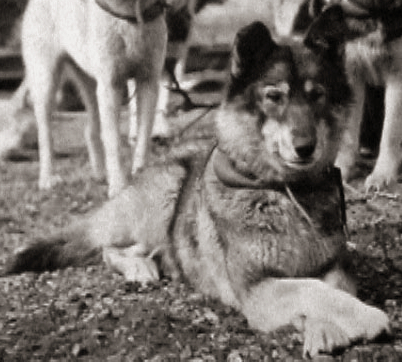
Togo was born in Little Creek, AK sometime in October of 1913. He was the offspring of Dolly, one of the original female Huskies Lindenburg placed in the Pioneer's Kennel, and Suggen. Suggen, who was part Malamute, was Seppala's leader in the All Alaskan Sweepstakes in 1914. When Togo was very young, an ailment caused his throat to swell. Since Seppala didn't pay much of any attention to the small pup, his wife cared for Togo by applying hot rags to his neck to soothe him. After Togo began to grow, he became hard to handle and was mischievous. Whenever Seppala would try to harness up a team, Togo would run around and nip at the ears of Seppala's dogs. By the time he was around six months old, Victor Anderson, who originally owned Togo, had enough of the pup's behavior and gave him to Seppala. Seppala then decided to give Togo to a friend that wanted a dog to keep as a house pet when she returned to the United States. The woman who took Togo in gave him a comfortable place to sleep outside, and fed him a diet of T-bone steaks. Over the short while that she had Togo, his behavior worsened, and he had snapped at her numerous times. Togo wasn't fond of being confined (he preferred to roam the open tundra) and eventually jumped through her parlor window and returned to Little Creek. However, he was caught and returned to the lady. The act of breaking free happened again and again. Having proved that he's not a dog who enjoys life as a pet, Seppala took him back. Togo continued to get loose and pester Seppala's team whenever he drove off with a team. On one occasion, Togo had run up onto an oncoming team of Malamutes, which lead to him being mauled. Togo had learned a lesson the hard way, but this incident helped shape Togo into one of Seppala's best leaders.
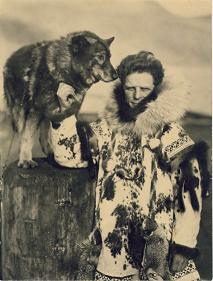 One day in November, Seppala and Stevenson had been notified that gold had been found in a mine, so they quickly assembled a team and set out for Dime Creek. Back in the kennel, Seppala had Togo secured and made note to not let him loose for a day or so, as he didn't want to take any chances of Togo following them. Throughout the day, Togo was calm and quiet, but all of that changed later that evening when the family at the kennel had gone to bed. Togo managed to break free of his tether and attempted to jump the seven-foot-high fence that surrounded the kennel. He nearly made it, but caught one of his hind legs in the wire mesh and was dangling. Squealing like a pig, and with all of other dogs barking, the kennel's boss came out to investigate and found Togo hanging on the outside of the fence and cut him free. Despite the gash in his leg, he ran off into the night, during a blizzard, and made his way to Solomon where he slept outside the roadhouse where Seppala was staying. The next morning, when Seppala and Stevenson set out, they could barely make out the outline of the team. Suddenly the team leapt forward with great speed, which Seppala suspected that they had caught the scent of a reindeer. After the conditions improved, Seppala saw what looked like a fox off in the distance. He was wrong. The fox turned out to be Togo, and Seppala could hardly believe it. Having no other choice, Seppala got out an extra harness and put him in the wheel position. He was eventually moved up next to the leader, Rusy, when he proved that he was the hardest working dog on the team.
Breeding a natural-born lead dog was something Seppala had been trying to breed for years. Togo, who was only eight months old and weighed forty eight pounds, had become Seppala's new and favorite lead dog that day. Seppala described him as a dog who was a trial to his driver. He was also intelligent, and a wonderful cross-country leader who had the ability to keep a strait course on ice and it stormy conditions. However, he was a bit difficult to work with around curves and banks, as he would try to cross them instead of going around. Togo was a dog who had a strong sense of direction, and had a mind of his own.
When the Diphtheria epidemic broke out in late December, 1924, the Board of Health asked Seppala if he would be willing to drive out to Nulato to pick up the 300,000 units of serum and bring it back to Nome. He was happy to accept the offer if they felt he was the best candidate for the job. With the instructions to be ready, Seppala returned to Little Creek where he stood by waited for updates to come forth. When that day finally came, around 6:00 am, the kennel was alive with Husky chatter. They had heard the phone ringing in the cabin and was eagerly awaiting for Seppala to come out into the kennel yard. When he did, all of the dogs, naturally, wanted to be selected. Seppala chose twenty of his best dogs (Togo as his lead) and set forth to Nulato.
Out on the trail, near Isaac's point, they came upon another driver who attempted to call out to him, but the a mixture of Seppala's parka hood and the wind, he only made out the words "serum-turn back". He looked back over his shoulder and saw that the musher was waving his arms for him to stop. Seppala wasn't able to stop the the team on a dime, so he had to travel about a mile ahead before he could turn around and come back. When he did make his way back the man, he handed Seppala a note and placed a package onto his sled. The note said that Governor Bone had sped up the process by converting it into a relay of eighteen other teams, as more deaths and new cases of Diphtheria had occurred since his departure. Instead of him meeting another driver half way in Nulato, he was to take the serum from Shaktoolik to Golovin where Charlie Olson would be waiting. He had already covered the fourty-three miles that day with the wind at their back. Now they were to turn back and face the cold, bitter night over the Norton Sound.
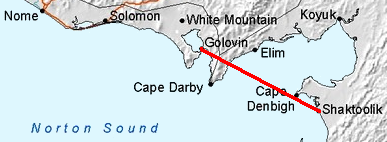
The Norton Sound is notorious for being a treacherous shortcut, as it has a tendency to shift and break up the ice into floes. This very thing happened to Seppala and Togo before. They were just a few miles out when Seppala heard a loud crack in the wind. He called out to Togo for him to stop, but Togo had felt the ice crack and was running at full speed towards the shore. Just short of the shore, Togo suddenly stopped and reared up into the air, then falling back into his teammates. Seppala was angry and thought that Togo was up to his old antics and went to investigate. As he approached Togo, he saw open water about six feet ahead of him. They were on a floe that was being blown out into the Bearing sea. Having no way to escape, Seppala bedded down with his dogs to conserve energy and hoped that the direction of the wind would change. Some hours later the direction of the wind had not changed. That is until Togo let out a sharp yelp, as he sensed that the wind was beginning to blow them back ashore. About nine hours later, Seppala could see the shore and another floe that was jammed up against it. Once they reached the other floe, Seppala looked for a place that they could cross, but the place that he did find was five feet too long for him to jump over. Having no other choice, Seppala got out a towline, attached it to Togo, and hurled him over to the other floe. Togo knew what Seppala wanted him to do and dug his nails into the ice and lurched forward. As Togo was pulling the two floes together, the line snapped and fell into the water. Being the smart dog that he was, Togo plunged into the frigid water and retrieved the line. Once he got back up onto the floe, he dropped the line, rolled over it twice, and resumed pulling the floes together until it was safe enough for Seppala and his teammates to cross.
Seppala didn't want to have to cross back over the Norton Sound in the dark, but he had no other choice but to press forward. Going around the Sound took about a day, and time was something Nome didn't have. Out on the Sound, the gale force winds were deafening, and Seppala would occasionally lean out over the sled to check for any sign of cracks in the ice. Luckily for them, the Sound was holding, and Togo was unfazed by the wind. He kept his head low and kept a strait course. By 8:00pm that evening, they pulled up to the bank at Isaac's Point. They had traveled eighty-four miles that day, half of which was against the wind. Seppala unhooked the dogs for the evening and fed them a meal of salmon and seal blubber. In the morning, they would have to travel the last fifty miles to Golovin.
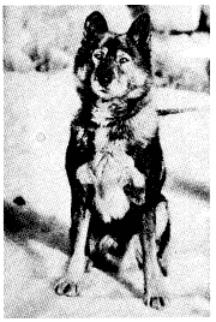 At 2:00am the next morning, Seppala was awoken by the owner of the roadhouse. With a storm that had been approaching Alaska from over the golf, it was time for Seppala to ready his team. He took the serum that was being kept by the stove and warped it in various layers of furs as an extra precaution. With a storm raging outside, he wanted to take no chances with damaging the serum. While Seppala was harnessing up the last few dogs to the sled, an Eskimo approached him and said "Maybe you go more closer shore". Eskimos were known for not taking chances, which Seppala understood. With the storm, he would have to be cautious.
Out on the trail between Isaac's Point and Golovin, Seppala decided to stay within a few hundred feet away from the shore, which made the ride a bit rough. But the Eskimo had been right. This was no time to be out on the water, as the ice over the Sound had broken up. It also appeared that the cracks further out were coming closer to them. And in some spots there were open bodies of water in front of them, which Togo avoided. Once they were safely ashore, Seppala stopped and cared for his team to make sure that they were ready to summit the Little McKinley mountain, one of the toughest parts of the trail to Nome. The ridges of the mountain were about eight miles long, and the downgrades were steep. A driver had little time to recover from one ridge to another.
About thirteen hours later, they reached Golovin and passed the serum over to Charlie Olson. Seppala's part of the relay was over. He and Togo had traveled 135 miles, which is two and a half times the distance more than any of the other mushers covered in their part of the relay. All of which was done at top speed in some of the most dangerous conditions. And despite all that they had to endure, all that Seppala and his team needed was a good rest. All that stood between them now was Golovin and the last seventy-eight miles to Nome.
After the serum run, in 1926, Seppala had planned a tour of the lower fourty-eights with the intentions of racing in the Northeast. In October of that year, Seppala, Togo, and fourty-two other dogs boarded one of the last steamships of the season and made their way down to Seattle. Seppala was happy, as now Togo would now recieve the credit that he deserves once and for all.
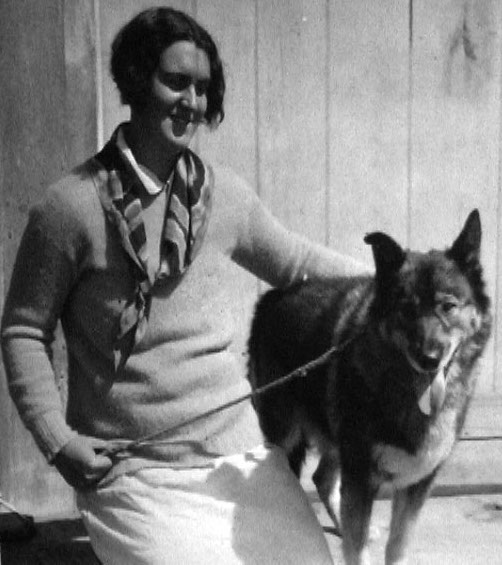
Once they arrived in Seattle, their tour eventually led them to California, the Midwest, and finally the Northeast. During their tour they made various promotional appearances, posed for photos, and educated the public about Siberian dogs and life in the arctic.
 By late 1927, Seppala was on his way to Wonalancet, New Hampshire, when Arthur Walden invited him to participate in the burgeoning race circuit. Walden, like Seppala, was a tough guy to beat. The only difference was his breed of choice, which was the chinook. Having been a racer who rarely lost a race, he thought to himself what it may be like to go up against a team huskies. When it came time for the race, Seppala was the one who came out on the top.
During the race in the Poland Spring, Seppala stopped to help untangle one of the competitor's, Elizabeth Ricker, team. Having been impressed by Seppala's team, Elizabeth replaced her team with some of his dogs, then bought some of his remaining dogs. With these dogs, she opened her own kennel on the resort and bred and sold the dogs.
After spending time in the Poland Spring running a new kennel with Elizabeth, Seppala decided that it was time for him to return to Alaska. During the time they've been in Maine, Togo had aged considerably. The decision was tough for Seppala, but he decided that it would be better to leave Togo with Elizabeth, as he was partially blind and was suffering from arthritis. When the time came for Seppala to leave on a cold and cloudy March day, Togo raised his paw and placed it on Seppala's knee as if he was questioning why he wasn't going with him.
On December 5th, 1929, Seppala found the courage to have Togo euthanized at the ripe old age of 16. His body was then mounted and put up for display at the Yale Peabody Museum in New Haven, Connecticut. During his time there, visitors were allowed to touch his mount, which, over time, damaged it. This damage lead to having his tail and ears replaced. Togo is now on display (under glass) at the Iditarod Sled Dog Trail Race Museum near Anchorage, AK.
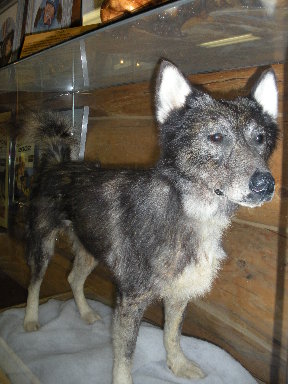 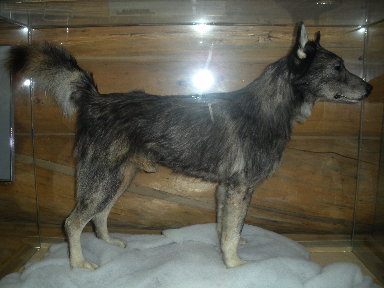 |
| Photographs by BaltoSeppala | baltostruestory.net |
There are no known videos of Togo, but here are a couple of videos of Iditarod participants crossing the Norton Sound. The first video is a prime example of how violent the Sound can become!
Source material: Seppala: Alaskan Sleddog Driver | The Cruelest Miles

 14652 visits


 Balto
Balto