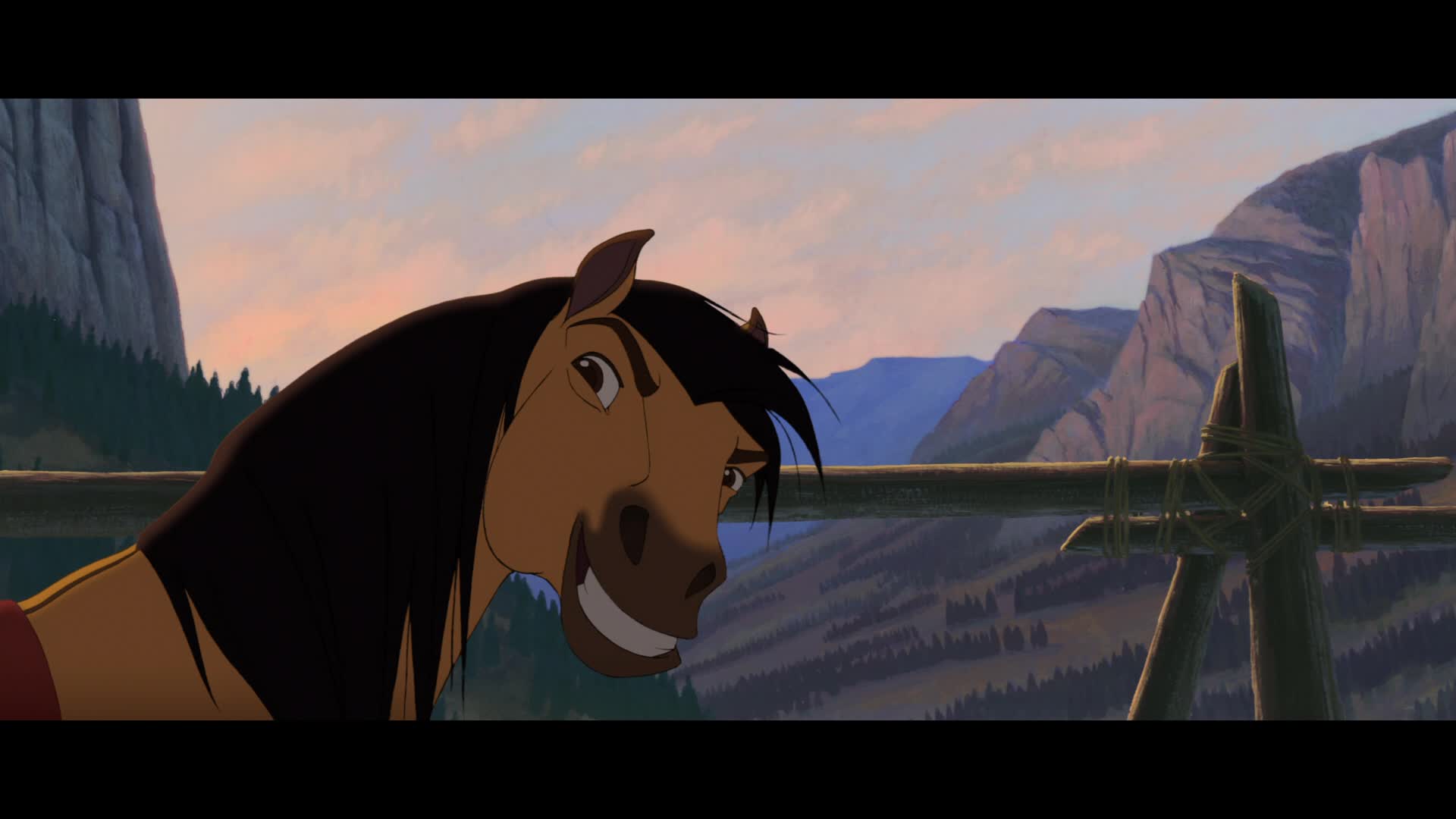


This is a rough guide to the possible genes that cause the coats of the equine characters in Spirit.
Note: If there are any phrases, words or terms that you do not understand, press Ctrl+F on your keyboard and type in ‘Dictionary’ (without the quotation marks) and have a look at the bottom of the article. If there is something that you don’t understand and it’s not in the dictionary, post below and I’ll leave a description.
This is long, so I don’t blame you if you skip most of it, but this is for people who want a complete understanding of the genetics in the Spirit universe.
------------------------------------------------------------
There have been previous articles on the coats and breeds of the horse characters in Spirit, but so far there has been no guide to the detail in the coats and possible offspring coats until now, when I will cover the subject of:
Equine Coat Genetics
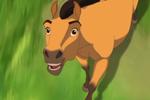
Let's start at the beginning. We all know that Spirit's father was a black stallion (although I have never heard, read or seen this on official content from books, the film or the special features, but most fans agree with the fact). This means that there are only two possibilities for his genetics:
Ee
Or
EE
The rest of his genes could be anything, but this bit is the crucial bit for the chance of him producing either a uniform black foal or a foal with black points but with the red gene (like a buckskin). Because he is a black horse, he does not have the ee gene, which would produce a pure ‘red’ horse like a chestnut.
Let’s assume for a moment that he is an EE gene, and this means that any foal he produces will have black points, like a bay or buckskin.
Now let’s assume he has the Ee gene. This means that he is still a black horse, but only has a 50% chance of a foal having black points. If this was the case, Spirit had an equal chance to be born as a palomino as a buckskin because there would be no grantee that he would receive the dominant extension gene. So for the sake of ease in this article, I am pronouncing Strider as a homozygous (double dominant) extension stallion.
Now for Esperanza. Because she is palomino, she is part of the ‘red’ family. Without doubt she has the cream gene, but may also have agouti (A) and silver (Z). She has definitely got the gene nCr, a homozygous (or double) cream gene would make her a perlino or other diluted red horse. Here are the possibilities:
aa
Aa
Or
AA
With either:
No silver gene
Zz
Or
ZZ
Now, we can illiminate aa because she would have to be a ‘black’ horse (black, grullo, ect). Also, ZZ can go because that would make the foal a ‘silver ____’ coat, with a diluted mane and tail. Visually, she could be Aa or AA because it allows red horses. If we imagine that Strider was an Ee black horse and Esperanza was an Aa red horse with no silver gene, then the following coats could be produced:
Palomino 25%
Chestnut 25%
Smokey Black 12.50%
Buckskin 12.50%
Black 12.50%
Bay 12.50%
As you can see, buckskin is possible but unlikely, so I am not happy with this result. So I will try it again with strider as EE as I decided:
Smokey Black 25%
Buckskin 25%
Black 25%
Bay 25%
Much better, this makes more sense and there is a higher chance for Spirit’s coat. But what about Esperanza being AA? I tried this combination, and it is even more hopeful, since the only two foal outcomes were bay and buckskin, 50% each.
To sum up the possibility of Esperanza having a silver gene, here is the outcome. Let’s say that Strider is AA and Esperanza is EE, so bay and buckskin are the only possible options. If Esperanza was homozygous silver (ZZ) these would become silver bay and silver buckskin. Therefore, she is either Zz or has no silver gene. But if she has Zz there is a 50% chance that that her offspring will have a silver dilution, bringing the four possibilities (bay, buckskin, silver bay, silver buckskin) all back to 25%.
So, for the sake of possibility, we shall say this:
Strider – EE/aa
Esperanza – ee/AA/Crcr/zz
Now we can clearly say that Spirit’s coat genetics are – Ee/Aa/Crcr
Another thing about Spirit is how he has a dorsal stripe, part of the primitive markings. This is unusual for a buckskin horse, and is usually seen on a dun horse, not buckskin. But it is not impossible for a non-dun horse to possess a dorsal stripe, and it is important to bear in mind that neither of Spirit’s parents have a dun gene.
Here’s the tough part: Rain’s parents. Kathleen Duey has written four books based on the unseen characters in Spirit: Stallion of the Cimarron and includes Rain’s mother Sierra. From the image on the front of the book, it looks as though Sierra was a chestnut splash, and her parents were Rafael (palomino stallion) and Bonita (grey mare). This throws up a few issues, such as how her father was (presumably) a solid palomino so Bonita must be the one to have the splash gene. But Bonita is grey, so her coat could be any colour underneath the faded coat.
We know the following:
Sierra is a red horse and so is her father. This means that Bonita doesn’t have to be a red horse, but if she is a black horse her genes must only be semi-dominant. Bonita could be any EE horse coat but will be Ee instead, or underneath her grey coat she could be a red horse.
Sierra’s coat is chestnut, so a must be ee and have no extension gene. She is likely to have inherited this from her father, a palomino, and Bonita cannot be homozygous extension or else Sierra would be in the black horse family.
Sierra inherited the splash gene from her mother. Bonita could be SplSpl or Splspl.
Sierra did not inherit the grey gene, so Bonita must be Gg, not GG.
To make things easier for myself, I decided that both were red horses, with Rafael being palomino and Bonita being chestnut splash (grey). In this combination, it did not matter which agouti trait either of them had, because the results always ended up like this:
Palomino
Chestnut
Each coat also had a 50% chance of being grey and 50% chance of being splash marked (if Bonita was Splspl), giving Sierra’s chestnut splash coat a 12.50% chance of occurring. To help her along, we’ll say that that Bonita was a homozygous splash, meaning that all her foals would have a splashed coat, bumping Sierra’s coat up to a 25% chance.
We’ll call them all AA genetics because all coats will be available and will pass on at least one dominant gene.
Now we know the coats of:
Rafael – ee/ AA/Crcr
Bonita – ee/ AA/Gg/SplSpl
Sierra – ee/ AA/Splspl
Again, according to Kathleen Duey’s books Sierra’s mate was Storm, a black pinto stallion, whose parents are unknown. Now, from Rain’s markings we can see that she is a tobiano, since she has large, round patterns of colour on a white base (or is it the other way around?). Pinto is a vague description of a horse’s coat, so we can now make it more accurate to say that the coat is tobiano. Of course, markings like splash and tobiano can be mixed and appear on one horse, but let’s keep it simple and keep it to one at a time.
So, assuming Storm isn’t a silver black tobiano here is what we know:
Storm must have either an EE or Ee to be a black horse, but because Rain is a red horse he must be Ee to allow her coat.
He could be either TT or Tt for his tobiano coating.
He will be an aa horse because he has one or more dominant extension genes and has a black coat.
This leaves a few options open, and because we don’t know anything about his parents, we have to make up our own genetics for him. To make Rain’s coat more likely, we shall call him a homozygous tobiano, or TT.
But before we finalise the results, there is something important for me point out. Rain is a chestnut horse with a paler mane and tail, so she must actually be a chestnut tobiano with a silver gene, or a flaxen chestnut, although this is often simply called a chestnut. Her main and tail are lighter due to a silver dilution. This means that at least one of her parents must have at least one dominant silver gene. A horse doesn’t have to have a ‘silver’ coat to carry a ZZ gene, but since black tobiano horses tend to have white in their manes and tails as well as their usual black coat, we shall call Storm a silver black tobiano. But, it is debateable that this could cause a silver dapple dilution of his coat, so maybe Sierra has the ZZ gene. It’s certainly possible, since palominos can carry silver genes and her mother was a grey horse, allowing almost any coat to be hidden underneath, even a silver one.
For the sake of making this all easier we will call this the “Mystery Silver Gene”.
So if we leave the MSG out we can all Storm:
Ee/aa/TT
This means that Rain’s coat genetics are – ee/Aa/Zz/Tt
Now we’re making progress! We can now mix Spirit and Rain’s coat genetics to get all possible outcomes of their foal:
Palomino 12.50%
Chestnut 12.50%
Silver Buckskin 6.25%
Silver Bay 6.25%
Buckskin 6.25%
Bay 6.25%
Palomino Tobiano 12.50%
Chestnut tobiano 12.50%
Silver Buckskin Tobiano 6.25%
Silver Bay Tobiano 6.25%
Buckskin Tobiano 6.25%
Bay Tobiano 6.25%
That concludes the article’s purpose – to show the possibility for Spirit and Rain’s offspring’s coat. There are a few notes following this including sources and definitions
NOTE: Because the genetics of each individual character wasn’t spelled out in front of us by the producers and writers, this guide may not be completely accurate, but instead is a rough example. So if your fan foal’s coat is not on here, don’t be alarmed, it could still be possible. This has been created not for the amount of different coats, but for the chances of the main ones occurring.
Dictionary:
Extension or E gene:
Extension decides if a horse is typically a black or red base coated horse. Horses with the EE gene can be a black horse or a red horse, but red horses must have black points like the bay and buckskin coats. Horses with the Ee gene can be any coat of the EE gene, but there is only a 50% chance of them passing on the dominant gene to their offspring. An ee horse will be a red horse with no black like a chestnut, dun or champagne.
Agouti or A gene:
Agouti restricts the extension gene and so is often paired with extension. An AA horse will be a red horse with black points (bay and buckskin), but can never be a black, grullo, or other black horse and will not produce a uniform black foal. An Aa horse will be the same colour as an AA horse but there is only a 50% chance that it gives its offspring the dominant gene. Also this gene can be paired with an aa horse to produce a uniform black foal. An aa horse has no restriction to its black gene and so will be uniform black, grullo or another black horse. There is also another version of agouti that cause seal brown horses, but this does not apply to the horses in Spirit.
Dun or D gene:
The dun gene is considered a dilution, and is seen with primitive markings like the dorsal stripe, legs stripes/bars and pale guard hairs at the base of the tail. A horse with the DD gene will always be some sort of dun (be it red dun or dunalino) and will always have dun offspring. Dd horses have the same coats as DD ones, but only have a 50% chance of passing on the dominant gene. A horse with a dd gene has no dun dilution and is so it has no primitive markings and (unless there is another dilution) is saturated colour.
Cream or Ccr gene:
The cream gene has a lot to it, so here are the basics. A horse without the cream gene will be chestnut while a horse with one dominant gene will be palomino, and a horse with a double dominant gene will be perlino. Cream is another dilution and can be doubled to pale the coats. CC means there is no cream gene and can be any coat other than the cream dilutes. CcrC means that the coat is golden or creamy, like a palomino or buckskin, because it only has the one dilution. CcrCcr is the double dilution, and so you will get a perlino or cremello. Cream can also be doubled with silver to make the mane and tail paler still. CcrCcr can cause the skin to be pink, the eyes blue and the hooves pale.
Silver or Z gene:
The silver gene can cause silver dappling and usually turns black to brown and dilutes manes and tails to a paler colour, such as flaxen or white. A horse with the ZZ gene doesn’t have to have a visual dilution, but a horse with a Zz gene will.
Tobiano or T gene:
The tobiano markings are round and oval shaped and go over the back and down the legs. It is a common pinto pattern and the face and tail are usually dark (unless diluted). TT means that all foals will have a tobiano pattern alone or with other markings. Tt also provides the marking, but there is only a 50% chance that the foal will receive the gene.
Splash or Spl gene:
Another marking, the splash gene is a gene that causes irregular white markings on the upper legs and face. Splash can be mixed with other patterns. SplSpl horses will always have splashed foals. Splspl horses will only give the marking to foals 50% of the time. Horses without the gene are splspl.
Homozygous:
A gene that is double dominant, e.g.: EE, AA, ect. This means that all offspring will have at least one dominant gene from the parent and will have the colour/marking visible. Depending on the gene, the horse does not have to have the colour/marking visible.
Dominant:
A dominant gene will override a recessive gene. So an AA horse with an aa horse will produce an Aa foal. Think of it as a table: A and A along one side, a and a along the other. When combined, all four probabilities have a dominant gene present. If an Aa horse and an aa horse are bred, there is a 50% chance that the foal will be Aa. An AA and an Aa will have a 75% chance of making an AA foal and a 25% chance of making an Aa foal.
Recessive:
The lower case part of a gene that is doubled, e.g.: ee, aa. The dominant gene always goes before the recessive gene. A recessive gene means that the gene is not present, but it can be added with the right breeding.
Mystery Silver Gene:
This is the name I’m giving to the silver gene that causes Rain’s mane and tail colour. She is a flaxen chestnut tobiano, which means that she has been diluted. We don’t know Storm’s (her father’s) parents, so he could have the ZZ gene, but because of his black pigment he might become dappled or visibly diluted if he did. Both Sierras’ parents could have given her a ZZ gene, but that would make her flaxen too. But a horse doesn’t have to be visibly silver to have the homozygous gene, so it is unclear which of her parents gave her the gene.
Sources:
Horse Eden Eventing – an online game that I play which simulates horse breeding for coat colours and skill. I learnt horse genetics to help me in this game. This site provides pictures. http://www.horseeden.com/index.php?referral=3497
Colour Calculator – You can select the coat, pattern, grey and genes of a sire and dam and find out the possibility for the foal outcomes and all possible genetic combinations.
Wikipedia – This showed me how the genetics work.





 66540 visits
 Report this article


 so that a cream
and red gene
so that a cream
and red gene


 Ahem.
Anyway, fantastic article ^^
Ahem.
Anyway, fantastic article ^^


 to be honest,
im a perfectionist, so i like to have the biology of characters
established
to be honest,
im a perfectionist, so i like to have the biology of characters
established


























I also made Cedar a smoky grulla in my table, due to the more brown than grey described in the books. I don't consider Sierra to be a splash gene horse either, and I did think quite a lot about that, but with NONE of her predecessors having the typical splashed blue eyes with the double gene present, I personally ruled this out entirely.
I consider Rain to be a Tovero, with Sierra being ONLY Tobiano at best, that means that Storm would have to be an Overo, if not Tovero black horse. If rain was homozygous for the Tobiano gene, all of her offspring would be some sort of paint horse. Until the recent show, I had her marked as this.... I love paints, so I'm a bit biased.